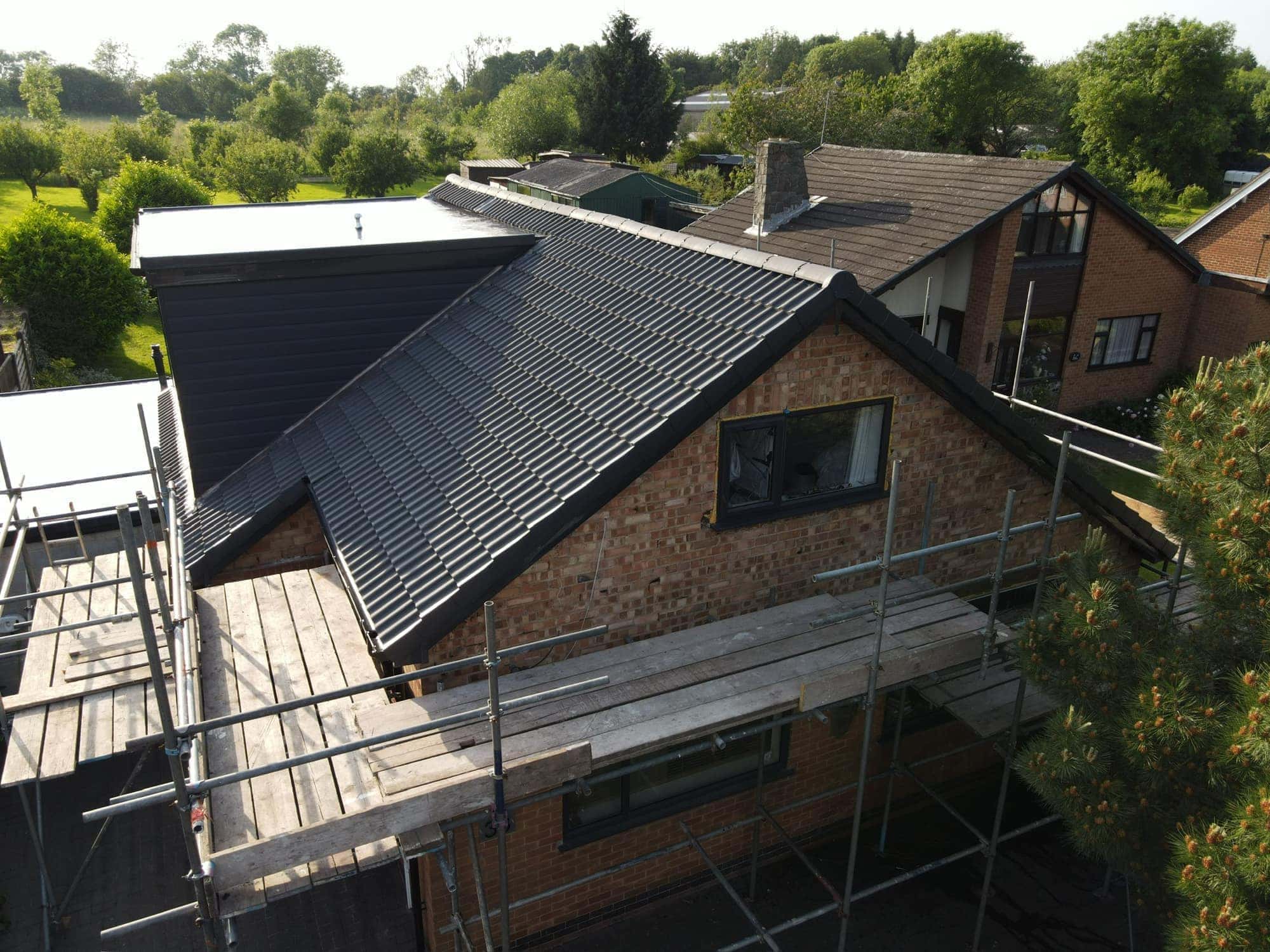
Roof Repairs in Cottingham
Cottingham's brick-and-tile houses around Hallgate and King Street have plenty of charm and, often, plenty of roof age to go with it.
Learn more →Cottingham, often called one of England’s largest villages, has a wealth of older brick-and-tile housing around Hallgate, Northgate and the conservation area at its centre, plus newer estates out towards Castle Hill. It is also one of the leafiest patches we cover — the mature trees that make the village so pleasant keep gutters filling and roofs shaded, so moss build-up and blocked rainwater goods come up here more than almost anywhere. Period roofs need slate and pantile repairs, chimney repointing and sympathetic re-roofing to suit the conservation area, while the newer estates bring straightforward re-roofs and roofline renewals.
Free quotes · £5 million public liability · 15-year guarantee
Roofs in the conservation area are mixed rather than uniform: the council's appraisal describes a wealth of diversity, from clay pantile — which it calls the East Riding's most common traditional roof covering — through slate to plain, or Rosemary, tiles. Slate is believed not to have reached the area until the railway arrived in 1846; plain tiles are later, particularly popular in the first half of the twentieth century and much in evidence around the village's residential edges.
The village grew in clear phases. That same railway brought smaller terraced houses, with development along New Village Road from the 1860s and side streets such as Exeter, Devon and Cornwall Streets, plus Linden Avenue off Northgate. Inter-war building filled the remaining gaps — Percy Buckle's semi-detached houses on Overland Road and near the Dene among them — and post-war council and private estates spread north, south and west over former farmland until the village reached its effective limit in the 1970s.
Age is the practical point. A railway-era terrace, an inter-war semi and a post-war estate house sit at different stages of their coverings' lives, so a roof here cannot be judged by what the house next door needed.
Cottingham's conservation area was redesignated by East Riding of Yorkshire Council on 28 July 2010, and the council records more than 200 houses and 25 listed buildings within it. St Mary's Church and Zion United Reformed Church, both on Hallgate, are among the listed buildings in the village. Changing the roof covering, extending the roof or removing a chimney may need permission or consent first.
Everything we do for Cottingham homeowners — tap a service for local detail.
Cottingham's brick-and-tile houses around Hallgate and King Street have plenty of charm and, often, plenty of roof age to go with it.
Learn more →Re-roofing in one of England's largest villages means respecting what is already there.
Learn more →Behind many Northgate and Hallgate homes sit flat-roofed extensions, garages and dormers that have quietly reached the end of their felt's life.
Learn more →Clay pantiles have topped East Yorkshire villages for centuries, and Cottingham's centre still shows them off along King Street and around the conservation area.
Learn more →A tile through a conservatory or rain pouring into a bedroom will not wait for office hours, which is why our emergency team answers around the clock across Cottingham.
Call 07447 352091Learn more →Leafy streets are part of Cottingham's appeal, but gutters below overhanging trees around Hallgate and the village centre block faster than most, and overflowing water soon rots the timber fascia behind.
Learn more →We supply and fit cast iron, cast aluminium, timber and lead guttering across Hull, Beverley and the East Riding, plus Twinplas — a twin-wall PVC box gutter made as a like-for-like replacement for the timber troughing on Victorian and Edwardian terraces — because not every roof suits white plastic.
Learn more →Twinplas is a twin-wall PVC box gutter made specifically to replace the timber trough gutters found on Victorian and Edwardian terraces and barn conversions.
Learn more →We regularly work on Grade II listed buildings across Hull, Beverley and the East Riding — from a detailed roof assessment at Lockington House, a Grade II listed former rectory, to an ongoing programme of lead work, ridge and verge work and like-for-like tile replacement on a listed property in Walkington.
Learn more →Older chimneys around Cottingham's conservation area deserve careful hands: repointing in the wrong mortar or losing an original pot changes the look of a street that has been settled for centuries.
Learn more →Tree cover and shade make Cottingham prime moss territory; north-facing pantile slopes around the village centre can turn green within a few years of cleaning.
Learn more →Loft rooms and landing skylights suit Cottingham's housing well, whether that means a roof window tucked discreetly into the rear slope of a village-centre cottage or a bank of VELUX units brightening a newer Castle Hill home.
Learn more →Replacing a conservatory roof turns a room that bakes in summer and freezes in winter into one you can actually use all year round.
Learn more →Traditional roofing details survive all over Cottingham: valleys between pantile slopes, chimney flashings on Hallgate's Victorian homes, and small lead-covered bays and porches near King Street.
Learn more →Woodworm is the larva of a wood-boring beetle — in East Yorkshire homes usually the common furniture beetle — tunnelling through rafters, purlins, joists and floorboards in the roof space.
Learn more →Old pantile roofs in Cottingham's conservation area are awkward to inspect up close — scaffolding one just to look at it is expensive and intrusive, so we fly a drone instead.
Learn more →As well as Cottingham itself, we regularly work in Cottingham village centre, Castle Hill, Hallgate, Northgate, King Street and across the HU16 area. Wherever you are, you get the same insured, guaranteed roofing work and an honest assessment of what your roof actually needs.
Yes — Armour Shield Roofing Services covers Cottingham (HU16), including Cottingham village centre, Castle Hill, Hallgate, Northgate. Every quote is free and no-obligation, and our workmanship is guaranteed in writing for up to 15 years.
There is no single answer. The council's appraisal for the conservation area records clay pantile, slate and plain (Rosemary) tile side by side, so two neighbouring houses can carry different materials. Slate is thought to post-date the railway's arrival in 1846, and plain tiles tend to be later still.
East Riding of Yorkshire Council states that Atwick is the only conservation area in the East Riding with an Article 4 direction, so Cottingham's is not subject to one. Permitted development rights are still restricted in any conservation area: roof extensions need planning permission, and listed buildings, 188 King Street among them, need listed building consent for alterations. Confirm your own property with the council.
Age is the main difference. Estate housing built after the wars is younger than the railway-era terraces, so its roofs are at an earlier stage of life. Work on an older roof in the conservation area instead starts from what is already on the building, because that setting expects materials matching what was there before.
Free, no-obligation quote — usually the same working day.
Loading the quick form… If it doesn't appear, call 07447 352091 and we'll take the details over the phone.