Everything we do for York homeowners — tap a service for local detail.
York's housing spans so many eras that no two repair calls look alike: slipped Welsh slate above a Victorian terrace in Fishergate or South Bank, a cracked pantile on a Dunnington cottage, storm-lifted flashing on an interwar semi in Acomb.
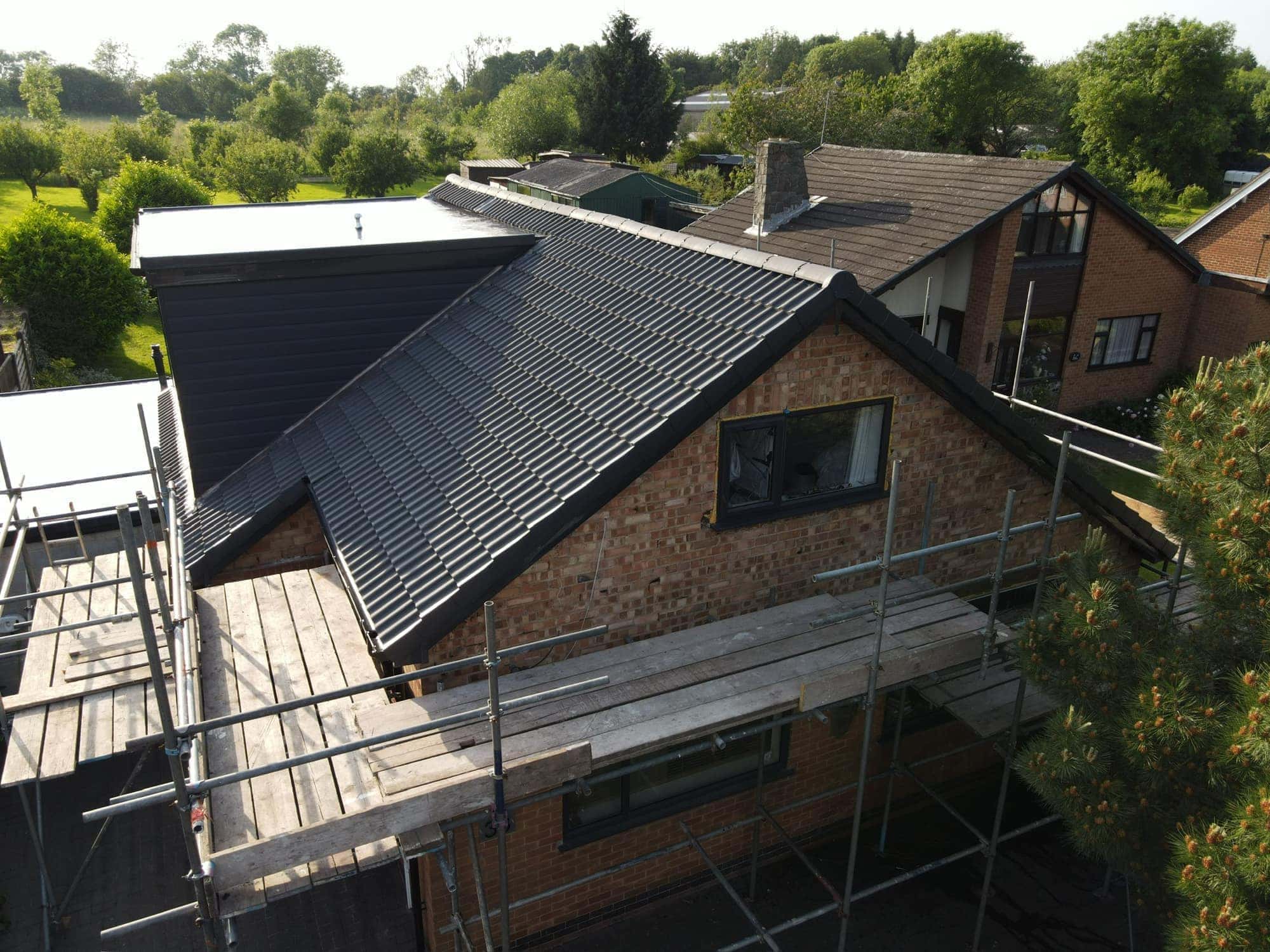
Learn more →Re-roofing in York runs from interwar semis across Acomb and Dringhouses, whose original coverings are now approaching ninety years old, to period homes near the centre that deserve slate or clay reinstated like-for-like.
Learn more →Rear kitchen extensions behind terraces in Fishergate and South Bank, garages across Acomb and Woodthorpe, dormers on family homes in Copmanthorpe — York keeps a surprising number of flat roofs working hard.
Learn more →Look across York's rooftops and the city's story is written in its coverings: slate terraces ringing the centre, handmade clay tile on older streets inside the walls, pantiles on village houses out at Dunnington and Wheldrake, and concrete interlocking tiles across Acomb and Dringhouses.
Learn more →24/7 emergencyWhen a gale crosses the Vale of York there is little high ground to slow it down, and slipped ridge tiles, torn felt and rocking chimney pots follow.
Call 07447 352091Learn more →Victorian terraces around Heworth and Fishergate often still carry their original deep timber trough gutters and bargeboards — where a trough has rotted we fit Twinplas, the twin-wall PVC box gutter made to replace timber troughing like-for-like without altering the roof edge — while Acomb's interwar semis tend to hide rot beneath decades of gloss paint.
Learn more →York has regulated its rainwater for centuries: a City Corporation order of 1763 required spouts and rainwater pipes, and the Royal Commission’s survey found many lead rainwater heads still in place, the earliest dated 1743 — inverted bells in the later eighteenth century, fluted bowls in the early nineteenth.
Learn more →We have fitted Twinplas in York, a city with a long timber-gutter tradition: the Royal Commission’s survey of the city recorded timber eaves cornices carrying concealed gutters on Georgian houses in Bootham, and the terraced suburbs that followed — Bishophill from the 1850s, Scarcroft by 1889, South Bank mostly by the 1890s — went up in brick under Welsh slate.
Learn more →York has over 1,500 listings covering more than 2,000 individual buildings, because one entry can take in a whole row, and the Central Historic Core — first designated in 1968 — holds the greatest concentration of them.
Learn more →York's terraces carry mile after mile of shared brick stacks, many long redundant but still standing over bedrooms in Heworth, South Bank and Fulford.
Learn more →Mature trees are part of York's suburban character, and beneath them — across Dringhouses, Bishopthorpe and the leafier streets of Acomb — shaded north-facing slopes turn green within a few seasons.
Learn more →Terraced streets in Fishergate, South Bank and Heworth rarely leave room to extend outwards, which is why so many York households look up instead — and a properly flashed roof window is at the heart of any loft plan.
Learn more →Replacing a conservatory roof turns a room that bakes in summer and freezes in winter into one you can actually use all year round.
Learn more →From parapet gutters on Georgian townhouses off Micklegate to the valleys and bay-window roofs of Victorian terraces in Fulford and Heworth, York leans on lead more than most cities.
Learn more →Woodworm is the larva of a wood-boring beetle — in East Yorkshire homes usually the common furniture beetle — tunnelling through rafters, purlins, joists and floorboards in the roof space.
Learn more →Scaffolding a three-storey terrace in one of York's tight streets just to look at the roof is slow, intrusive and expensive — and in the city's conservation areas it is nobody's first choice.
Learn more →