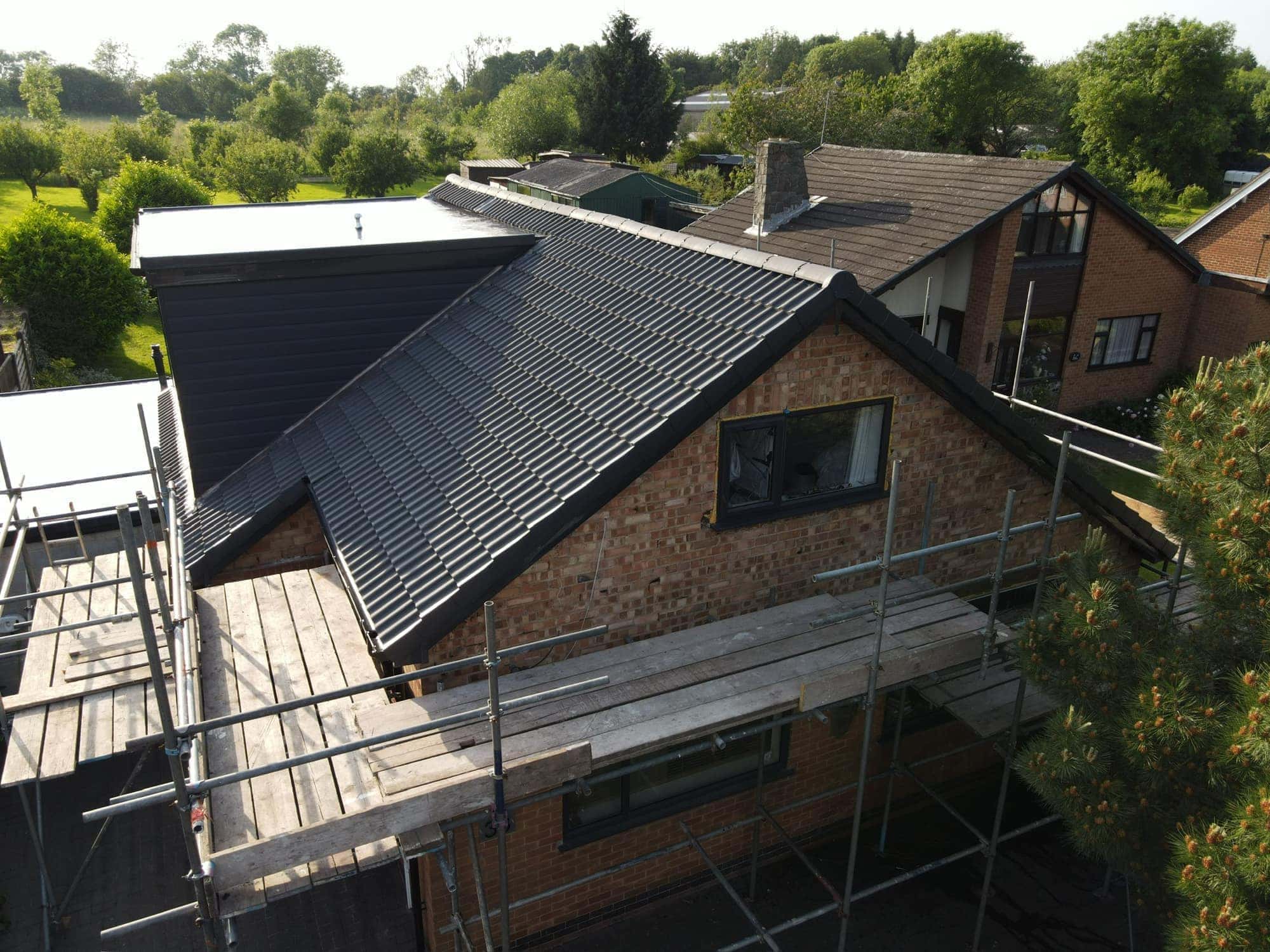
Roof Repairs in Howden
Howden is about as local as it gets for us — our Gilberdyke base is only a few minutes away — so a leak or slipped tile here rarely waits long for attention.
Learn more →Howden is a historic market town in the DN14 district, gathered around the striking part-ruined Howden Minster, with a conservation area of period brick, pantile and slate properties. Conservation-aware repairs, pantile and slate matching, lead work and chimney maintenance are common on the town’s older roofs, while the surrounding villages — including Gilberdyke, where we are based — bring re-roofing, flat-roof and roofline work. It is our home patch, so we are rarely more than a few minutes away.
Free quotes · £5 million public liability · 15-year guarantee
Most of the town centre went up in the Georgian and Victorian periods, the conservation area was designated in 1974, and the greater part of the town's medieval street pattern survives. Sixty-five buildings are on the National Heritage List, one at Grade I and three at Grade II*, and the listed stock is typically brick under Welsh slate or pantile.
The council's appraisal counts browny-red local pantiles as the majority of surviving original roofs, with about 15 per cent slate, Welsh and Westmorland, and a small share of Roman and French tile. Underlay was not the practice beneath clay pantiles of that age, so once one cracks there is little to hold water back; Victorian Welsh slate, by contrast, usually starts slipping from fatigue in the nails rather than any fault in the slate.
Ground around the town is low and flat, marshland in places and cut by drainage dykes, and the appraisal notes that on so low a horizon anything rising above the land is highly visible. A roof here is seen from a distance as well as from the pavement, which is a good argument for matching what is already on the slope rather than accepting the nearest equivalent.
Howden's 1974 conservation area and its listed buildings mean conservation area and listed building controls can apply. A change of roof covering, a new opening in a visible slope, or altering a chimney stack may need planning permission or listed building consent. Howden is not on East Riding of Yorkshire Council's Article 4 Directions list. Confirm the position with the council before work is specified.
Everything we do for Howden homeowners — tap a service for local detail.
Howden is about as local as it gets for us — our Gilberdyke base is only a few minutes away — so a leak or slipped tile here rarely waits long for attention.
Learn more →A re-roof in Howden's historic centre needs more thought than most: the streets around the Minster deserve materials that respect their setting, whether that means natural slate or clay pantiles rather than the cheapest concrete option.
Learn more →Not every roof in Howden is a pitched period one — extensions, garages and dormers across the town rely on flat roofs, and old felt rarely lasts as long as owners hope.
Learn more →Pantiles and slate give Howden's centre its character, and a new pitched roof near the Minster should look as though it has always been there.
Learn more →Being based in Gilberdyke means Howden is one of the quickest places for us to reach in an emergency — often a matter of minutes rather than hours.
Call 07447 352091Learn more →Rooflines on Howden's period buildings work harder than they look, and rotten fascias or overflowing gutters will quietly ruin brickwork and roof timbers alike.
Learn more →We supply and fit cast iron, cast aluminium, timber and lead guttering across Hull, Beverley and the East Riding, plus Twinplas — a twin-wall PVC box gutter made as a like-for-like replacement for the timber troughing on Victorian and Edwardian terraces — because not every roof suits white plastic.
Learn more →Twinplas is a twin-wall PVC box gutter made specifically to replace the timber trough gutters found on Victorian and Edwardian terraces and barn conversions.
Learn more →We regularly work on Grade II listed buildings across Hull, Beverley and the East Riding — from a detailed roof assessment at Lockington House, a Grade II listed former rectory, to an ongoing programme of lead work, ridge and verge work and like-for-like tile replacement on a listed property in Walkington.
Learn more →The chimneys on Howden's older houses have stood over the town almost as long as the Minster has dominated its skyline, and most now need periodic repointing, fresh flaunching or new lead flashings to stay weathertight.
Learn more →Pantile roofs in and around Howden collect moss steadily, and on the town's older properties the extra weight and trapped moisture do real harm over time.
Learn more →Howden's period homes often hide generous lofts that a well-placed roof window can turn into genuinely useful space.
Learn more →Replacing a conservatory roof turns a room that bakes in summer and freezes in winter into one you can actually use all year round.
Learn more →Around Howden Minster, leadwork is part of the architectural language, and repairs to valleys, bay-window roofs and flashings on the town's period properties should be carried out in kind — real code lead, worked traditionally.
Learn more →Woodworm is the larva of a wood-boring beetle — in East Yorkshire homes usually the common furniture beetle — tunnelling through rafters, purlins, joists and floorboards in the roof space.
Learn more →High, steep and historic roofs — Howden has plenty of all three — are exactly what drone surveys were made for.
Learn more →As well as Howden itself, we regularly work in Howdenshire, Eastrington, Gilberdyke, Newport and across the DN14 area. Wherever you are, you get the same insured, guaranteed roofing work and an honest assessment of what your roof actually needs.
Yes — Armour Shield Roofing Services covers Howden (DN14), including Howdenshire, Eastrington, Gilberdyke, Newport. Every quote is free and no-obligation, and our workmanship is guaranteed in writing for up to 15 years.
The conservation area appraisal does not favour them. It records that interlocking profiled concrete tiles weather less well and fail to contribute to the area's character, and it advises that even large-scale development should preferably use clay pantiles or slate. That is guidance rather than a rule for a single house, so it is worth raising the proposal with East Riding of Yorkshire Council's planning team before materials go on order.
Often a good proportion can. Sound clay pantiles are worth sorting as they come off and relaying on the most visible slope, with matched or salvaged stock making up the rest and any broken ones set aside. The appraisal encourages retention of traditional materials, so reuse is the sensible starting point on a roof in the conservation area.
In practice, yes. The Local Plan allocates land to the north-east of the town for 1,500 of the roughly 2,140 homes planned for Howden, and a modern machine-made covering is straightforward to match, so the work is usually about fixings, flashings and roofline rather than sourcing tiles. Outside the designated conservation area the choice of material is less constrained as well.
Free, no-obligation quote — usually the same working day.
Loading the quick form… If it doesn't appear, call 07447 352091 and we'll take the details over the phone.