Roof Repairs in Beverley
Clay pantiles have kept Beverley dry for centuries, but individual tiles slip, crack and let water in — especially on the older roofs packed around Saturday Market and Wednesday Market.
Learn more →Beverley is a historic market town with one of the region’s largest conservation areas — Georgian townhouses and period roofs in clay pantile and slate wrap around the Minster and Saturday Market. Heritage-aware roofing matters here: pantile matching to keep repairs invisible, careful lead work, and looking after the chimney stacks and pots that survive — many in the centre of town have been lost over the years. Out at Molescroft and Tickton the housing is newer, so alongside the conservation work we handle plenty of re-roofs, flat roofs and guttering on 20th-century and modern homes. Getting all of it right, sympathetically, is a core part of what we do.
Free quotes · £5 million public liability · 15-year guarantee
Brick had replaced exposed timber framing for even the smallest houses by the earlier 18th century, and thatch was still in use on roofs well into that century; pantile was the cheapest answer when those roofs came to be renewed. Steeply pitched roofs of the kind that once carried thatch survive at 19-21 Ladygate and 49 North Bar Within, and the gables finished with tumbling and raised verges point the same way.
Welsh slate was not generally available until the railway reached the town in 1846, so slate roofs here are likely to be Victorian or later, laid at the shallower pitch the harder slate allows. Three-storey houses are more numerous than in most East Riding settlements, some with living space in the attic above, and the council calls dormer windows surprisingly common for a town of this size.
Newer housing runs from Molescroft's ribbon development of the late 1920s through estates completed in the 1950s and about 1965, and the post-war Riding Fields and Swinemoor estates on the eastern side of the town. West of the centre the preserved landscape of the Westwood, common grazing land, brings open country hard up against the town's edge.
Two conservation areas cover parts of the town: the 1969 designation, taking in almost all of the historic core and its 339 listed buildings, and Grosvenor Place, designated in 1994. Both restrict permitted development, so a covering change, a front-slope roof window or removing a chimney can need permission, plus listed building consent if listed. Ask East Riding of Yorkshire Council before agreeing to anything.
Everything we do for Beverley homeowners — tap a service for local detail.
Clay pantiles have kept Beverley dry for centuries, but individual tiles slip, crack and let water in — especially on the older roofs packed around Saturday Market and Wednesday Market.
Learn more →Replacing a roof within Beverley's conservation area calls for more thought than simply ordering the cheapest tile: coverings near the Minster and the market squares may need to match the original pantiles or slate, and we advise on exactly that before anything is stripped.
Learn more →Georgian townhouses off Wednesday Market often carry flat-roofed rear additions and outriggers, while Molescroft's estates have their share of flat-roofed garages and extensions — and all of them eventually outlive their original felt.
Learn more →Look across Beverley's rooftops from any vantage point near the Minster and you'll see the local vernacular: warm clay pantiles broken up by slate on the grander Georgian townhouses.
Learn more →Storm damage in a town of tall townhouses and old pantile roofs needs a fast response — a dislodged ridge tile above Saturday Market is a danger to passers-by as well as to the building itself.
Call 07447 352091Learn more →Blocked and sagging gutters do disproportionate damage to Beverley's older brickwork, streaking walls and feeding damp into the rooms below.
Learn more →We supply and fit cast iron, cast aluminium, timber and lead guttering across Hull, Beverley and the East Riding, plus Twinplas — a twin-wall PVC box gutter made as a like-for-like replacement for the timber troughing on Victorian and Edwardian terraces — because not every roof suits white plastic.
Learn more →Twinplas is a twin-wall PVC box gutter made specifically to replace the timber trough gutters found on Victorian and Edwardian terraces and barn conversions.
Learn more →We regularly work on Grade II listed buildings across Hull, Beverley and the East Riding — from a detailed roof assessment at Lockington House, a Grade II listed former rectory, to an ongoing programme of lead work, ridge and verge work and like-for-like tile replacement on a listed property in Walkington.
Learn more →Many chimney stacks and pots in the centre of Beverley have been lost over the years, which makes the survivors worth keeping.
Learn more →The rippled profile of a pantile gives moss plenty of purchase, which is why so many roofs around Beverley — from terraces near Wednesday Market to family homes in Molescroft and Tickton — wear a green fringe by late winter.
Learn more →Daylight transforms a loft, and Beverley homeowners increasingly want roof windows rather than the upheaval of moving.
Learn more →Replacing a conservatory roof turns a room that bakes in summer and freezes in winter into one you can actually use all year round.
Learn more →Behind Beverley's Georgian facades lies a great deal of lead: parapet gutters, valleys, bay window tops and the flashings that seal chimneys through slate and pantile roofs alike.
Learn more →Woodworm is the larva of a wood-boring beetle — in East Yorkshire homes usually the common furniture beetle — tunnelling through rafters, purlins, joists and floorboards in the roof space.
Learn more →Tall Georgian townhouses and tightly packed streets make traditional roof inspections around Saturday Market awkward and expensive — scaffolding in a conservation area is nobody's idea of a quick look.
Learn more →As well as Beverley itself, we regularly work in Beverley Minster, Saturday Market, Wednesday Market, Molescroft, Tickton and across the HU17 area. Wherever you are, you get the same insured, guaranteed roofing work and an honest assessment of what your roof actually needs.
“Leonard did an excellent job replacing our wooden gutters with plastic ones which look in keeping. He was great to work with, got the job done quickly and we are really happy with the results. I would highly recommend his work.”
Yes — Armour Shield Roofing Services covers Beverley (HU17), including Beverley Minster, Saturday Market, Wednesday Market, Molescroft. Every quote is free and no-obligation, and our workmanship is guaranteed in writing for up to 15 years.
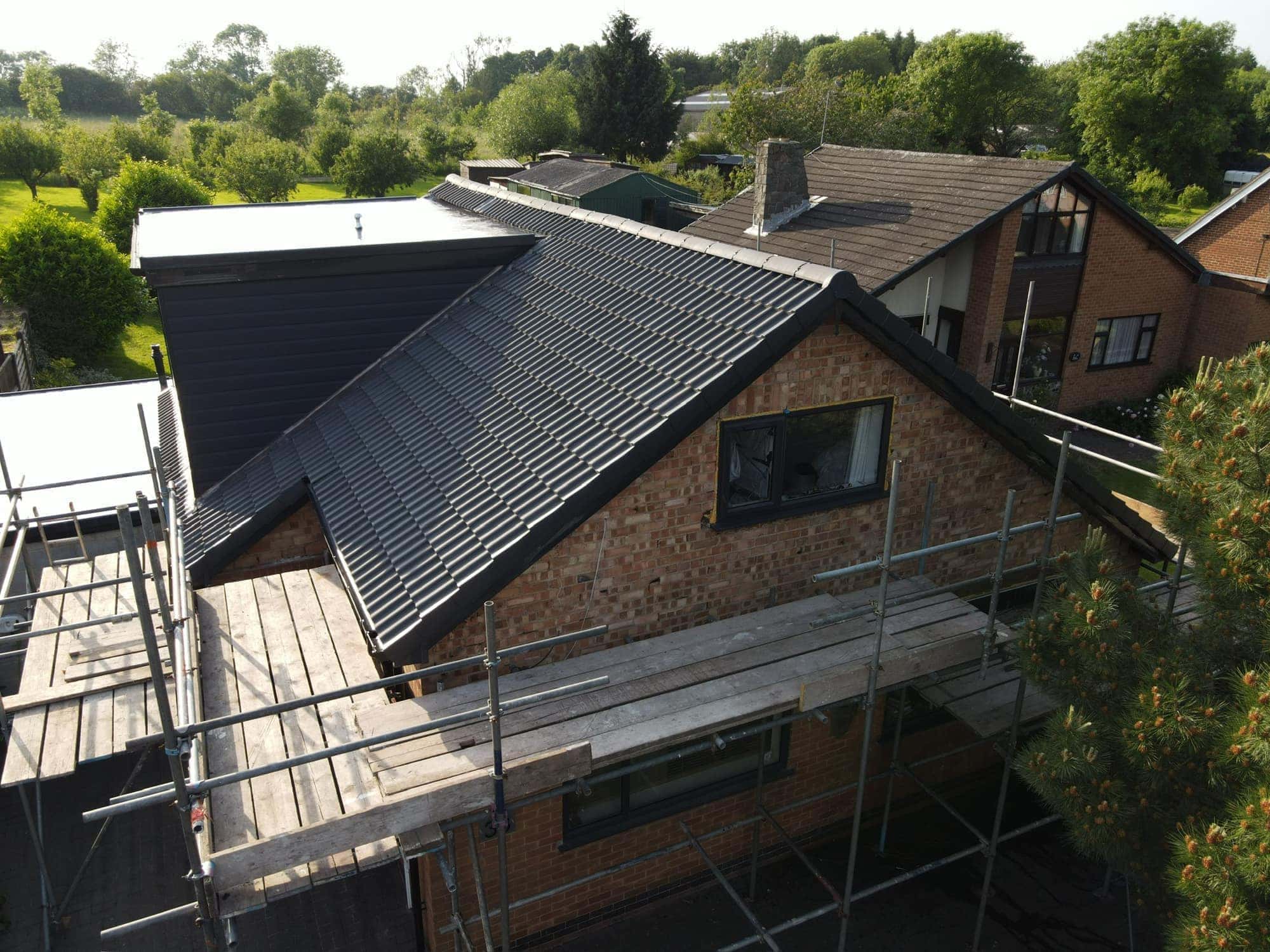
Two Grade II listed properties on Beverley’s doorstep show the conservation side of our work: a detailed roof condition assessment at Lockington House, the Grade II listed former rectory in Lockington, and an ongoing programme of lead work, ridge and verge repairs and exact-match tile replacement on a Grade II listed house in Walkington. In Beverley itself, in September 2026, we replaced the rotten timber trough across two terraced houses near Queensgate with a 9-metre run of Twinplas — the twin-wall PVC box gutter made to replace timber troughing like-for-like — fitting new timber corbels beneath it first so the gutter could be set to the correct falls, all finished in a day. The same month we rebuilt a badly eroded chimney stack in Beverley from the roofline up — new brick, oversailing course and flaunching, with the pot refitted under a bird guard. Other Beverley jobs in our gallery: a front bay window roof replaced in Code 6 lead after a storm blew the old covering off, with rolled hips and a scalloped lead apron; a plain tile roof that carried a lot of poor repairs, replaced with brown Sandtoft double pantiles, dry hips, dry valleys and new lead flashings to the chimney stacks; and a dormer bungalow re-roofed in charcoal double pantiles, where the dormer’s leaking felt roof was renewed in a liquid-applied system and the dormer clad in anthracite.
Possibly not. The council's appraisal records clay pantile as the prevalent covering in the conservation area, with Welsh slate also found in abundance, and on a listed building work is generally restricted to like-for-like repair unless consent is obtained. A different material could therefore need permission, and in some instances listed building consent as well; that question is one for East Riding of Yorkshire Council to answer before any order goes ahead.
Often not. For the Grosvenor Place conservation area the council advises that concrete tiles should be avoided, not least because their use on a historic roof structure can cause damage through the extra weight. The Beverley appraisal adds that older concrete tiles have a habit of losing their colour over time. On a period roof, then, the structure and the match both need checking before an order goes in.
In part. Tickton lies about four kilometres north-east of Beverley, and its historic core around Main Street has been a small conservation area since February 2009, separate from the town's own. Clay pantiles are the dominant covering in the village, with some Welsh slate, and modern properties provide examples of concrete tiles. Outside that core there is more freedom over materials, but East Riding of Yorkshire Council remains the authority to ask.
Free, no-obligation quote — usually the same working day.
Loading the quick form… If it doesn't appear, call 07447 352091 and we'll take the details over the phone.