Why is lead used on roofs?
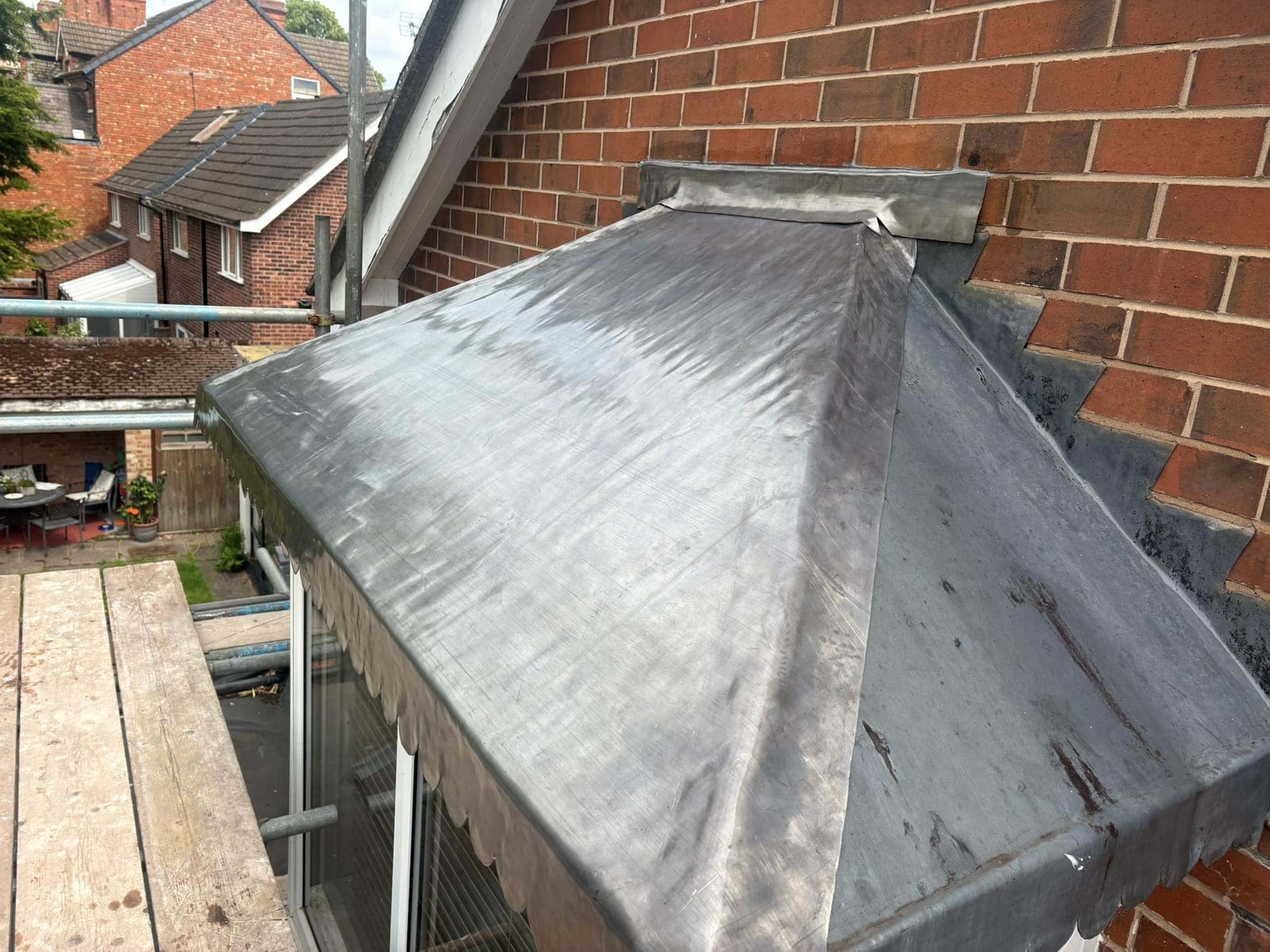
Lead is durable, malleable and weatherproof, which makes it ideal for sealing the complex junctions where standard tiles cannot — chimneys, valleys and wall abutments. Well-fitted lead can last 60+ years.
Can you replace stolen lead?
Yes. We replace stolen or damaged lead and can discuss anti-theft measures and alternatives where appropriate.
What causes lead flashing to leak?
Usually age and thermal movement cracking the lead, lead that was originally too long without joints, or poor dressing. We replace with correctly sized, properly dressed lead.
What thickness of lead do you use?
Code 4 for flashings — the trade standard for the job. Correctly sized and fixed lead is what makes the difference between flashing that lasts decades and flashing that fails in five years.
Can you repair just part of a lead roof?
Yes. Where the rest of the roof is sound we can renew a single elevation or section in keeping with the original work — we have done exactly that on period lead roofs locally.
Is lead work guaranteed?
Our workmanship is guaranteed, and lead itself is one of the longest-lived roofing materials there is — decades of service when fitted correctly.
Do you do lead gutters, hoppers and downpipes as well as flashing?
Yes. A lead-lined box or parapet gutter is lead work in the truest sense: the sheet is laid in bays with laps and drips so it can expand and contract without splitting, and a badly laid one is a classic source of leaks on older buildings. We also fit and replace lead hopper heads and downpipes. If you are weighing lead against cast iron or cast aluminium for a period property, our cast iron and heritage guttering page compares them.