Roof Repairs in Hull
Slipped slates and cracked flashings turn up regularly on the Victorian terraces around the Avenues and Newland, where original coverings have carried well over a century of westerly weather.
Learn more →Hull has one of the most varied housing stocks in the region, from Victorian and Edwardian terraces in the Avenues and Newland to inter-war semis, the large post-war estate at Bransholme and newer housing at Kingswood. Add the long rows of older terraces off Hessle Road and Holderness Road, many still under their original slate with shared chimney stacks, and almost every roof type in the country turns up somewhere in the city. Estuary weather off the Humber tests all of them — driving rain and wind that quickly finds a slipped tile or tired piece of flashing. We repair, re-roof and maintain the lot, from natural slate and clay pantiles to modern concrete tiles and flat-roofed extensions, right across Hull.
Free quotes · £5 million public liability · 15-year guarantee
The Avenues opened in 1875 and by 1910 had few vacant plots left, giving streets of late-Victorian and Edwardian houses in revived Queen Anne, mock Tudor and Arts and Crafts styles; it was designated a conservation area in 1974. On roofs of that age the fixings usually fail first: nail fatigue, perished mortar bedding and split flashings.
Garden Village, laid out in Summergangs for Reckitt & Sons workers, opened in 1908 and gained a second phase from 1923. Its brick walls, often pebble-dashed, carry steeply pitched roofs with overhanging eaves, so gutters and brackets sit proud of the wall and carry the run-off from a fast-shedding slope. Designation as a conservation area followed in 1970.
Bransholme's first houses were handed over on 1 May 1967, built on former farmland as part of the rehousing that followed wartime bombing. Kingswood, on the northern fringe, has been built out since the 1990s on low-lying land that was once marsh. Concrete interlocking tiles became the norm on post-war estates, and where they were used the mortar at ridge and verge and the felt beneath it usually give out long before the tiles do.
Hull City Council is the local planning authority, and its conservation areas include the Avenues and Pearson Park, Garden Village, Newland and Newland Park, Hessle Road and Holderness Road East and West. Twenty-seven Article 4 Directions here remove permitted development rights, so covering changes, chimney removal or a front roof window can need consent. Check with the council first.
Everything we do for Hull homeowners — tap a service for local detail.
Slipped slates and cracked flashings turn up regularly on the Victorian terraces around the Avenues and Newland, where original coverings have carried well over a century of westerly weather.
Learn more →Plenty of interwar semis between Anlaby Road and Sutton still wear their first roof, now approaching a hundred years old and increasingly brittle.
Learn more →Flat roofs do plenty of quiet work in Hull: rear extensions behind Newland terraces, garages on the Bransholme and Kingswood estates, and the dormers that open up loft space in Sutton.
Learn more →East Yorkshire's traditional covering is the clay pantile, and you can still spot them across Hull's older streets, alongside Welsh slate on Edwardian homes in the Avenues and concrete interlocking tiles on estates at Kingswood and Bransholme.
Learn more →Gales funnelling up the Humber can strip tiles from exposed streets around Hessle Road and Marfleet in a single night.
Call 07447 352091Learn more →Original timber rooflines on Hull's interwar semis, common around Anlaby Road, Sutton and the streets off Hessle Road, are often hiding rot behind flaking paint.
Learn more →We supply and fit cast iron, cast aluminium, timber and lead guttering across Hull, Beverley and the East Riding, plus Twinplas — a twin-wall PVC box gutter made as a like-for-like replacement for the timber troughing on Victorian and Edwardian terraces — because not every roof suits white plastic.
Learn more →Twinplas is a twin-wall PVC box gutter made specifically to replace the timber trough gutters found on Victorian and Edwardian terraces and barn conversions.
Learn more →We regularly work on Grade II listed buildings across Hull, Beverley and the East Riding — from a detailed roof assessment at Lockington House, a Grade II listed former rectory, to an ongoing programme of lead work, ridge and verge work and like-for-like tile replacement on a listed property in Walkington.
Learn more →Tall brick stacks crown almost every terrace in the Avenues and Newland, and after a century of frost and coal-fire heat many need repointing, fresh flaunching or new lead flashings.
Learn more →Mature street trees make the Avenues one of Hull's greenest neighbourhoods, and one of its mossiest, since shaded, north-facing slopes hold moisture for months.
Learn more →Loft conversions are a popular way to gain a bedroom in Hull's terraces, where extending outwards around Newland or the Avenues is rarely an option.
Learn more →Replacing a conservatory roof turns a room that bakes in summer and freezes in winter into one you can actually use all year round.
Learn more →Bay-fronted terraces define whole streets in the Avenues, and their flat bay tops, valleys and cover flashings were almost always finished in lead.
Learn more →Woodworm is the larva of a wood-boring beetle — in East Yorkshire homes usually the common furniture beetle — tunnelling through rafters, purlins, joists and floorboards in the roof space.
Learn more →Three-storey terraces around Newland and the Avenues make traditional roof inspections slow, costly and scaffold-heavy.
Learn more →As well as Hull itself, we regularly work in the Avenues, Newland, Kingswood, Bransholme, Anlaby Road, Hessle Road, Sutton, Marfleet and across the HU1–HU9 area. Wherever you are, you get the same insured, guaranteed roofing work and an honest assessment of what your roof actually needs.
Yes — Armour Shield Roofing Services covers Hull (HU1–HU9), including the Avenues, Newland, Kingswood, Bransholme. Every quote is free and no-obligation, and our workmanship is guaranteed in writing for up to 15 years.
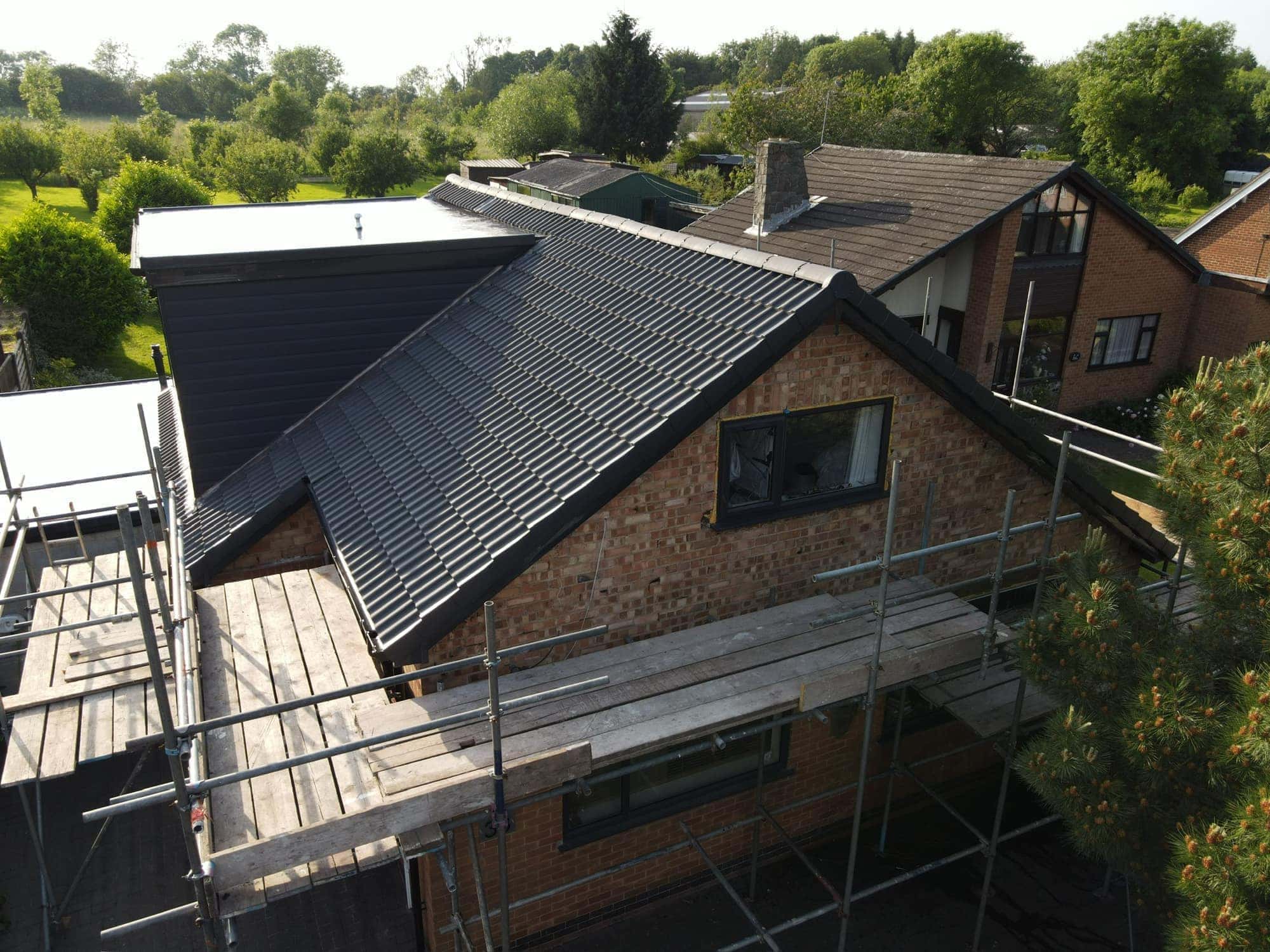
A chimney on a home in Hull had weathered past the point of repair, so we rebuilt it from the flashing up — new brickwork and oversailing courses, fresh flaunching, and a new pot and cowl — then re-leaded it throughout with new code-lead soakers, apron and flashings. Straight, watertight and built to outlast the roof around it. In July 2026 we carried out a full re-roof on a home in Hull. The old covering came off back to the rafters, and we re-tiled in Sandtoft Antique Double Roman tiles, laid on new treated, graded battens over a Soprema breather quilt membrane. The ridge, verges and vent tiles were finished with the Timloc dry-fix system — the whole roofline mechanically fixed, with no mortar anywhere to crack, wash out or work loose in the next storm. The Soprema membrane was a deliberate choice, not an off-the-shelf one. The space beneath the rafters is lived-in and short on insulation, so the roof needs to breathe. A breather membrane lets the moisture and condensation from the rooms below pass out through the roof, instead of being trapped against the timbers — which is exactly what turns into damp and rot over the years. A small decision on the day, a big difference for the life of the roof: built for how the house is actually used, not just how it looks.
An Article 4 Direction applies in the Avenues and Pearson Park conservation area, and planning permission is required there for an alteration to a roof that consists of a change in the type of roofing material. Installing, altering or replacing a chimney needs permission too. Matching what is already on the roof is usually the simpler route, but put the specification to Hull City Council before anything is ordered.
By 1913 the estate held 600 houses built in five sizes and twelve different styles, so it is safer to assume detailing varies along a row than to assume it repeats: measure the eaves, verge and ridge on the house itself rather than copying next door.
Planning permission for Kingswood was granted in December 1994 and 3,576 houses had been built there by the end of March 2015, so coverings in that part of the city are comparatively young. New does not mean maintenance-free: mortar bedding at ridge and verge, flashings and anything that depends on sealant tend to go first, and a slipped unit lets water in at any age.
Free, no-obligation quote — usually the same working day.
Loading the quick form… If it doesn't appear, call 07447 352091 and we'll take the details over the phone.